Qazaq24.com, ссылаясь на сайт Kursiv.Media, передает.
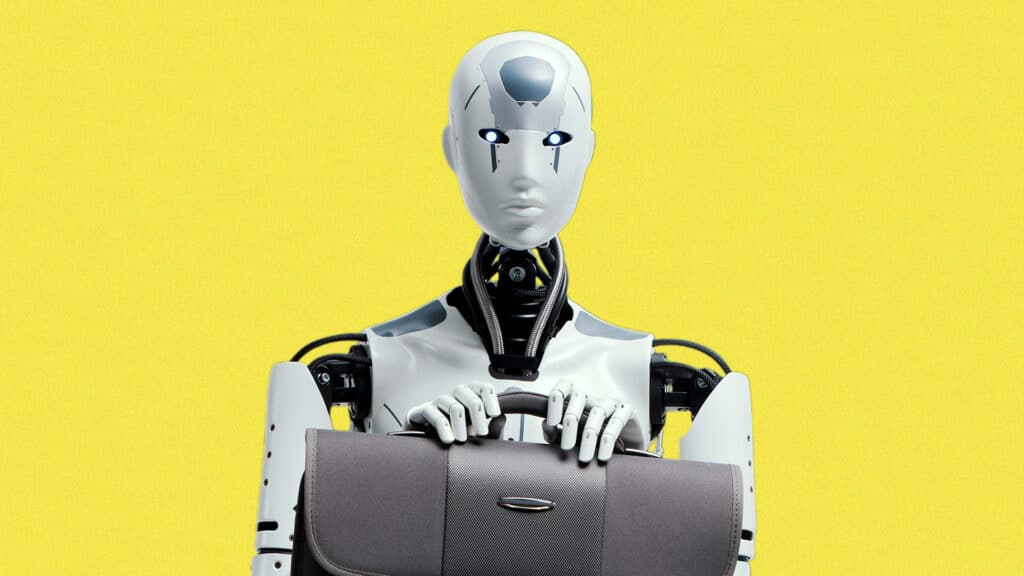
History shows that economists and researchers have struggled to accurately predict how new technologies will affect jobs and workers. Even experts currently studying artificial intelligence in the workplace acknowledge that their projections are informed but uncertain, according to a recent report by The Washington Post.
Shift from blue-collar to white-collar disruption
Unlike previous waves of automation, which primarily affected factory and trade workers, the rise of AI is expected to disrupt white-collar professions first. Roles involving cognitive and administrative tasks are increasingly exposed to automation.
New approach to measuring AI risk
Researchers from GovAI, a technology policy group, and the Brookings Institution developed a new method to assess which workers are most at risk — and which are better positioned to adapt.
They began with a widely used metric that evaluates more than 350 occupations based on their level of «AI exposure,» or the extent to which job tasks can be performed more efficiently using AI tools. For example, grading assignments is a task that AI could assist teachers with.
Read also: The Wall Street job AI can’t steal (yet).
Their analysis found significant overlap between AI capabilities and skills used in fields such as computer programming, marketing, financial analysis and customer service — suggesting those roles could be more vulnerable to automation.
Who is most likely to adapt
The researchers concluded that workers with higher levels of education and more diverse job experience are generally better equipped to transition into new roles. Other factors that improve adaptability include being younger than 55, having greater financial resources and living in urban areas with stronger job markets.
Clerical workers face higher risks
Not all high-exposure jobs carry the same prospects. For instance, both web designers and secretaries ranked high in terms of AI exposure, but their ability to adapt differed significantly.
Read also: The AI paradox: China is now worried its own tech will cause mass job losses.
Secretaries were among approximately 6.1 million workers — largely in clerical and administrative roles — identified as both highly exposed to AI and least likely to transition to new employment opportunities.
Disproportionate impact on women
Women account for about 86% of workers in these most vulnerable categories, highlighting the unequal effects automation may have across the workforce.
Lessons from past technological shifts
Allison Elias, a professor at the University of Virginia’s business school, noted that historical patterns help explain why female-dominated clerical roles may again be at risk.
Read also: AI threatens Kazakhstan’s public servant jobs.
Her research shows that administrative workers once hoped new technologies would lead to more advanced responsibilities and career growth. Instead, many were asked to handle increased workloads without corresponding pay increases, while job satisfaction remained low.
Outlook: mixed resilience among workers
The findings suggest that most workers affected by AI-driven changes will be able to adapt over time. However, a smaller segment — particularly those in highly exposed, lower-adaptability roles — may face greater challenges in securing new employment.