
 Войти
Войти
 Новости
 Погода
 Магнитные бури
 Время намаза
 Драгоценные металлы
 Конвертор валют
 Кредитный калькулятор
 Курс криптовалют
 Гороскоп
 Вопрос - Ответ
 Проверьте скорость интернета
 Радио Казахстана
 Казахстанское телевидение
 О нас
О нас



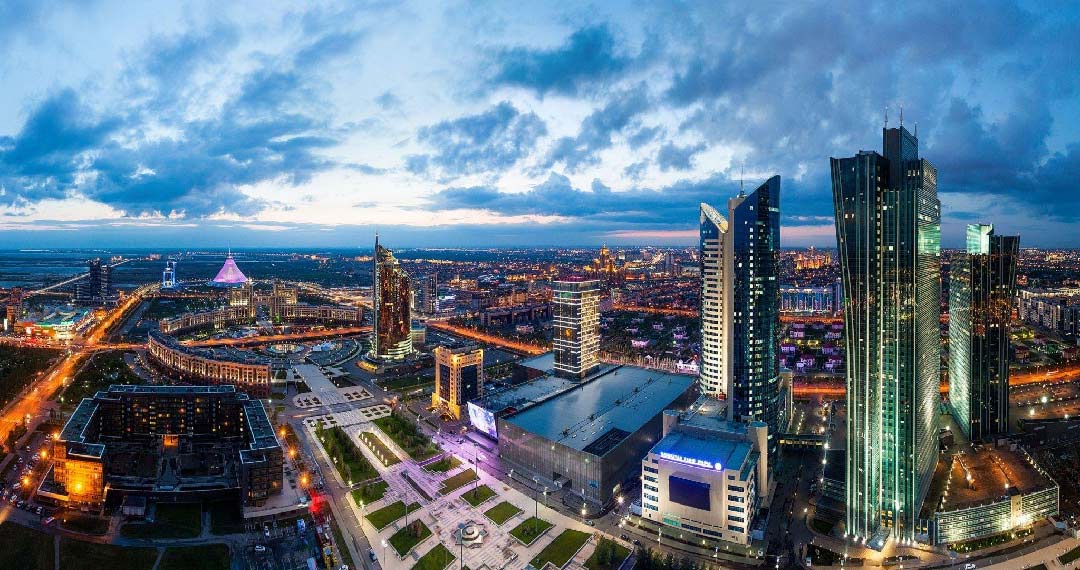

Kazakhstan’s oil dependence: Can the economy diversify?
Согласно информации сайта Kursiv.Media, сообщает Qazaq24.com.
Since independence in 1991, Kazakhstan has built its economic engine on oil. With an estimated 30 billion barrels of proved reserves, the country ranks among the world’s leading petroleum powers. Output has increased fourfold, from 22 million tons in 1991 to 88 million tons in 2024. In that year, crude oil and related products accounted for 52.5% of export earnings and about one-third of government revenues, underscoring the nation’s dependence on a single resource.
High oil prices and rising production boosted GDP and living standards, pushing Kazakhstan into upper-middle-income status. But this success carried hidden costs. Oil inflows drove up the tenge’s real exchange rate, making imports cheaper while domestic producers lost competitiveness. Non-oil industries stagnated, leaving the economy tied ever more tightly to crude, a textbook case of the «resource curse» or Dutch disease. Generous concessions to foreign oil majors in the 1990s entrenched reliance on multinationals, limiting local value creation and reducing the state bargaining power.
The paradox is clear: oil wealth has coincided with persistent currency weakness. Despite repeated oil booms, the tenge has steadily weakened from about 150 per U.S. dollar in 2002 to nearly 550 by 2025. This chronic depreciation highlights both internal fragility and vulnerability to external shocks. Kazakhstan’s fortunes also remain closely linked to Russia, its main transit route and trading partner, leaving the tenge exposed whenever the rouble collapses under sanctions, oil price crashes, or geopolitical turmoil, as seen in 2014 and 2022.
Why diversification has fallen shortEfforts to address these vulnerabilities have produced only limited results. The National Fund of the Republic of Kazakhstan, created in 2000 to stabilise the economy and save oil revenues, initially helped finance infrastructure and build foreign assets. It has cushioned public finances in downturns, but growing reliance on the fund to plug budget gaps has raised doubts about fiscal discipline. A buffer for future generations risks becoming a default tool for day-to-day spending.
KazMunayGas, created in 2002, was meant to give the state a stronger hand in the oil sector. Yet with only minority stakes in Tengiz and Kashagan, operational control remained with foreign majors. Expansion left the company heavily indebted, and during the 2015–2016 oil price collapse, it required National Fund support to remain solvent. Instead of driving diversification, KMG became a revenue conduit and a reminder of the limits of «pragmatic resource nationalism». Both the fund and the state oil company were designed to reduce vulnerability but ultimately reinforced the centrality of hydrocarbons.
Kazakhstan has also rolled out a succession of diversification programmes. The Industrial-Innovative Development Strategy (2003–2015) and the State Programme on Accelerated Industrial-Innovative Development (2010–2019) sought to grow manufacturing and high-tech sectors but delivered only modest results. The Kazakhstan-2050 strategy put innovation and diversification at the centre of national priorities, aiming to transform the country into a knowledge-based, private-sector-driven economy. Yet progress has been slow, and exports remain dominated by oil, gas and metals.

This lack of diversification is especially problematic given the scale of the challenge Kazakhstan now faces. The government has pledged to reach net zero by 2060, endorsed the World Bank’s Zero Routine Flaring by 2030 initiative, and launched pilot projects using digital and monitoring technologies to cut methane emissions, among other measures. Yet without a broader economic shift, these commitments risk becoming little more than aspirations. To deliver on its pledges, Kazakhstan must break free from commodity dependence and embrace robust green industrial policies. By modernising infrastructure, investing in human capital and strengthening institutions, the country can chart a path toward a more resilient and self-sufficient future in a global economy already moving beyond hydrocarbons.
Ultimately, the most valuable resource Kazakhstan has is not oil, but its people. The country’s limited diversification may partly reflect underinvestment in human capital, particularly in skills that support innovation and sustainable development. If Kazakhstan is to meet the dual challenge of economic resilience and the transition to a low-carbon economy, it must build human capital not only in traditional sectors but also in sustainability itself, training specialists, entrepreneurs and leaders who can drive change. Human capacity, more than hydrocarbons, will determine whether the country can escape the resource trap and secure a resilient future. Kazakhstan’s next boom must be built on people, not petroleum.
Moldir Mukan, associate professor of finance at Narxoz University, contributed to this article.
 Другие новости на эту тему:
 Просмотров:316
 Эта новость заархивирована с источника 17 Декабря 2025 15:54





 Самые читаемые