
 Войти
Войти
 Новости
 Погода
 Магнитные бури
 Время намаза
 Драгоценные металлы
 Конвертор валют
 Кредитный калькулятор
 Курс криптовалют
 Гороскоп
 Вопрос - Ответ
 Проверьте скорость интернета
 Радио Казахстана
 Казахстанское телевидение
 О нас
О нас





Kazakhstan’s privatization push: Why is the government selling off state assets?
Согласно сайту Kursiv.Media, передает Qazaq24.com.
Having formally achieved the goal of the second wave of privatization by reducing the public sector’s share of GDP to 15%, the government of Kazakhstan continues to sell off state-owned assets, planning to expand privatization further. If the medium-term plans are successful, private entrepreneurs will have the option to privatize enterprises upon request.
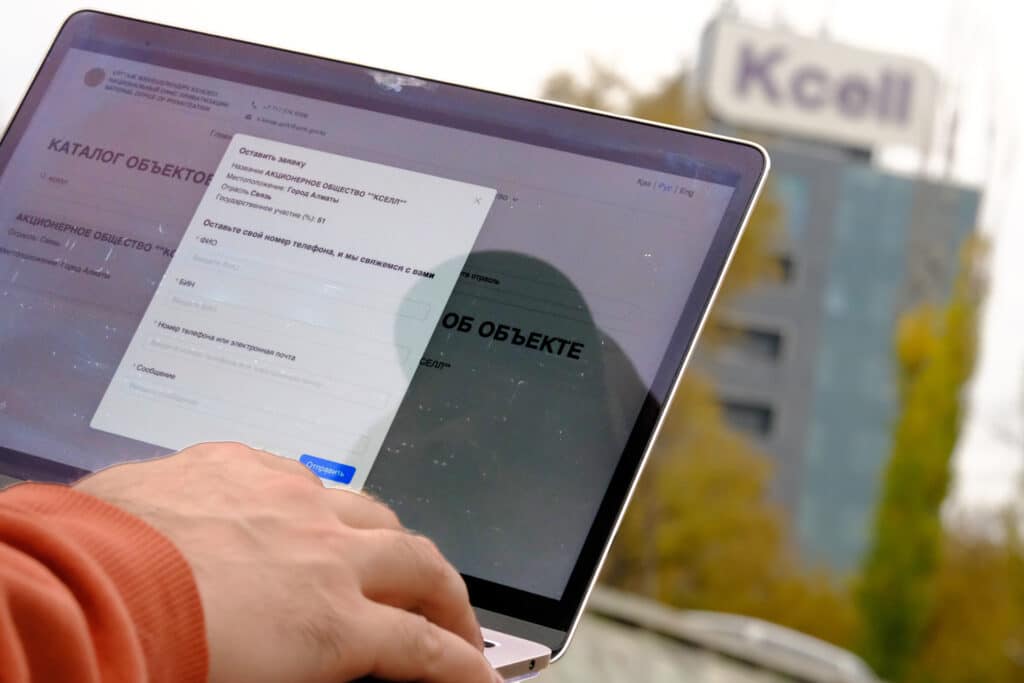 Photo by Ilya Kim
Target achieved
The second wave of privatization initiated ten years ago was aimed at decreasing the quasi-public sector’s contribution to GDP. In February 2014, Nursultan Nazarbayev, Kazakhstan’s first president, directed the cabinet and the Samruk-Kazyna fund to review state-owned enterprises, compile a list of assets for privatization and draft regulations to implement the Yellow Pages Rule, aimed at reducing government intervention in the economy and fostering competition.
«At the same time, a clear list of conditions and procedures for possible state entry into private company capital should be provided. By 2020, the share of state ownership should be reduced to the level seen in OECD countries — 15% of GDP,» Nazarbayev stated at the time.
Following this directive, the cabinet adopted several privatization plans, with the latest covering the years from 2021 to 2025 and remaining in effect today. These plans included lists of targeted enterprises. Based on the outcomes of measures implemented between 2016 and 2020, the Ministry of Finance reported that the privatization goals had been fully achieved, despite delays in the sale of some assets and the removal of certain enterprises from the list. The current list from the Ministry of Finance, which outlines assets for privatization between 2021 and 2025, includes 433 items. Out of these, 312 (72%) are up for sale, with 54 (12%) in pre-sale preparation, 27 (6%) at auction, 285 (66%) sold and 67 (15%) excluded. Over the decade of the second wave of privatization, as of November 2024, 984 out of 1,774 assets put up for sale have been sold for a total of 794 billion tenge (approximately $1.5 billion).
The Yellow Pages Rule was first formalized in 2015, when the newly adopted Entrepreneur Code included references to a list of activities conducted by enterprises under direct and indirect state control. In less than 10 years, this list has been significantly reduced. However, the format for implementing the Yellow Pages Rule has largely served the interests of the public sector. It outlines the activities permitted for different state-owned enterprises, even in markets where private players are already present.
The reduction in the list of activities reflects the success of the asset divestiture process: types of activities were eliminated as state-owned enterprises were sold to private players. The Yellow Pages Rule would have been fully implemented if the procedure had included an a priori ban on creating new companies without a state commission decision assessing the need for such enterprises and the actual presence of market competitors.

If we evaluate the effectiveness of state policy by its quantitative goal — reducing the public sector’s share in GDP below 15% — this objective has been officially achieved for five years. According to the 2023 budget implementation report published by the Supreme Audit Chamber in June 2024, «Since the adoption of the National Development Plan, there has been no dramatic reduction in the share of state participation in the economy. Between 2019 and 2022, the share decreased by only 0.7%, from 14.9% to 14.2%.» At the same time, the 15% GDP target remains a benchmark for government agencies through 2025.


All for sale?
However, quantitative indicators should not be misleading when assessing how Kazakhstan’s government evaluates the effectiveness of its privatization policy.
In May 2024, President Kassym-Jomart Tokayev signed a decree on measures to liberalize the economy, indicating that the government plans at least one more round of «large-scale and accelerated reduction of the public sector’s share in the economy by completing the privatization process.» To achieve this, the president directed the government to update the list of state property by the end of the year and establish the National Privatization Office (NPO).

This body, which began operating under the Agency for the Protection and Development of Competition, has been tasked with several key responsibilities. These include:
Developing criteria for state facilities subject to mandatory privatization (the methodology for this has already been published); Analyzing quasi-public sector companies to assess the feasibility of transitioning them to a competitive market environment; Creating a list of state assets to privatize (with a defined sale format, such as auction or public offering); Monitoring the privatization process. Collage by Ilya Kim
A few specifics about quasi-public sector enterprises that may be privatized in the next phase are outlined in the 2029 National Development Plan, adopted in July 2024. The fourth priority of the plan is «Developing competition and reducing market distortions.» In the privatization section, it highlights the government’s intention to continue shedding quasi-public assets.
«A reduction in the state’s share is planned across several markets, including freight rail transportation, telecommunications, passenger air transportation and the fuel and energy sector,» the National Development Plan stated.
However, privatization will not be limited to these sectors. According to the presidential decree, an «application list of state assets subject to privatization» has been introduced. An application refers to a request made by a private entity to have a state enterprise or quasi-state asset put up for privatization. The final decision on whether an asset will be included in the privatization list will be made by the State Commission for Economic Modernization. According to the NPO, the privatization process initiated by such an application is expected to begin as early as 2025. The NPO’s website has published a regional register of state assets, allowing interested parties to apply for the privatization of assets such as Kcell JSC (51% controlled by Kazakhtelecom), Tau-Ken Samruk, Samruk-Kazyna Construction, the Kazakhstan Sustainability Fund and numerous other companies and enterprises with state participation.
 Другие новости на эту тему:
 Просмотров:306
 Эта новость заархивирована с источника 27 Ноября 2025 01:20






 Самые читаемые